
The police says that the Karnataka Forum for Dignity is one of the fastest growing outfits in South India with nearly 40,000 members
Terror attacks over the past nine months -- the Jama Masjid firing, the Varansi blasts and 13/7 bombings -- have left security agencies and investigators clueless. The reason? Today, the threat is not from outfits like the Indian Mujahideen or the Students' Islamic Movement of India, but fringe elements that may strike anytime. Vicky Nanjappa reports
The Communist Party of India-Maoist have established linkages with the banned Students Islamic Movement of India, and are looking to set up a base in south India, an Intelligence Bureau report has revealed.
The interrogation of former president of the banned Students' Islamic Movement of India Syed Salahuddin Salar has only gone on to confirm the fact that a major part of the terror financing for subversive activities in India come from Saudi Arabia.

The Centre on Monday extended the ban on terrorist group Students Islamic Movement of India (SIMI) for five years for its involvement in fomenting terrorism and disturbing peace and communal harmony in the country.
As investigations progress into Wednesday's serial blasts in Mumbai, the police have started examining the role played by fringe elements of both the Indian Mujahideen as well as the Students Islamic Movement of India.
A special tribunal on Wednesday upheld the ban imposed by the Centre on Students Islamic Movement of India, which has links with Pakistan-based terrorist outfits including Lashkar-e-Tayiba and its front, Indian Mujahideen.
However, security agencies have something to smile about now, with the alleged mastermind in the Jaipur blasts case revealing key details about the Students Islamic Movement of India, which infact corroborates with the statements given by Riazuddin Nasir, the Lashkar-e-Tayiba operative arrested in Karnataka earlier this year.
Fathima Begum, mother of terror accused Mohammad Niaz Abdul Rashid, arrested in France early this month, on Wednesday claimed her son was innocent and did not have links with any terrorist organisation, including the banned Students Islamic Movement of India in India.
Lashkar-e-Tayiba operative Abu Jindal, who was arrested in Delhi on Monday, was once called Syed Zabiuddin Syed Zakiuddin Ansari, according to police records. He was a member of the Students Islamic Movement of India in the 1990s and was known simply as Ansari. He was given the alias of Abu Jundal after he joined Lashkar.
A specially-designated tribunal has lifted the ban on the Students Islamic Movement of India. Justice Geeta Mittal, a Delhi High Court judge who is heading the tribunal, said that the material given by the Home Ministry, justifying the ban on SIMI, was insufficient. The government maintains that SIMI still indulges in communal activities and it is a threat to the country.The organisation has been banned by the Centre for the last seven years.
Adnan, an engineering graduate from Bijapur in northern Karnataka, made the costly mistake which helped the police track down the ten SIMI activists. Adnan was on the run ever since some of his accomplices were arrested in Karnataka last November.
According to the IB, SIMI has recruited nearly 25,000 members across the country, of which 6,000 were recruited through the new agency which has come in handy since the crackdown by security agencies and their constant monitoring had made things difficult for the SIMI cadres.
SIMI conducts its activities under the cover of nearly 12 different outfits in Kerala. The IB believes Thiruvananthapuram, Kochi and Kondotty near Mallapuram are hubs of SIMI activity.
Thirteen top SIMI leaders, including its former chief Safdar Nagori, were arrested from a house in Indore on March 27 where they were holed up to conduct the meeting of the banned outfit. Since then over a dozen SIMI workers have been arrested from different cities in the state.
Police said they have recovered objectionable literature and letters from their possession, which indicate they were involved in the activities of SIMI and were in contact with the arrested leaders. Police also found evidence from them relating to a meeting conducted by SIMI activists based in Delhi in Jabalpur sometime back with an intention to help their associates lodged in Jabalpur jail for carrying out the activities of the banned organisation, he said.
Shaheen Force, the women's wing of the banned Student's Islamic Movement of India, is spreading its tentacles all over India. SIMI general secretary Safdar Nagori and his brother Qamruddin, who were recently arrested in Indore, revealed this chilling fact during their interrogation. The main task of the Shaheen Force -- which is most active in Hyderabad is to brainwash children into taking up the jihadi path. These women had allegedly roughed up cops in Hyderabad.
The police team, accompanied by the banned outfit's leaders Qamaruddin Nagori, Safdar Nagori and Aamil Pervez, visited the jungle and recovered 122 guilletines and explosives, 100 detonators, wire bundles, starters and VCD from the area where the training camp was organised in 2007, highly placed sources told PTI in Indore. According to sources, they also tested explosives at a farmhouse, owned by one Shahjad Hussain in the Gawalu village of Balwada police station.
Indian Mujahideen terror suspect Manzar Imam may have been the man the police was looking for in the Students Islamic Movement of India training camp case in Vagamon, Kerala. However, his interrogation has revealed that the IM may have plans to set up a base camp in Jharkhand, and this has sent officials into a frenzy. Vicky Nanjappa reports
On February 4, the Government of India is expected to re-impose the ban on the Students Islamic Movement of India. And the SIMI has made it clear that it will not fight the ban before the tribunal.
In an interview with rediff.com's Vicky Nanjappa, Trideep Pais says that most of the youngsters he has dealt with have started carrying a diary in which they write down what they do through the day so that it can be used as an alibi if they get into trouble with the police.
The Maharashtra Police on Monday arrested four members of the Students Islamic Movement of India from Mana village in Akola district. The police busted a secret SIMI meeting in Mana village where nearly 35 SIMI members were present.SIMI was banned by the government in 2002 for its involvement in terrorist attacks in India. It has been labeled a terrorist organisation by both India and the United States.
The Karnataka and Andhra Pradesh police are sending special investigation teams to Kerala to assist the ongoing probe into the blast that rocked the Ernakulam district collectorate on July 10.The police teams from Karnataka and Andhra Pradesh, which have witnessed terror attacks in the past, will share their expertise with the Kerala police. Central intelligence agencies suspect that some activists of the SIMI might have been involved in the blast.
Reacting strongly to Congress general secretary Rahul Gandhi's remark that the Rashtriya Swyamsevak Sangh was no different from banned terror outfit Students Islamic Movement of India, the Bharatiya Janata Party on Wednesday said the young leader seems to have lost his mental balance and has shown political immaturity by his comments.
Investigations, which have been conducted on the basis of various confessional statements of Indian Mujahideen operatives, have revealed that the dreaded outfit -- an offshoot of the Students Islamic Movement of India and the Asif Raza Commando Force -- had undertaken blasts at Varanasi, Bangalore, Ahmedabad, Delhi and Surat.
Security agencies told rediff.com that this year Al Qaeda will team up with the Harkat-ul-Mujahideen and the Lashkar-e-Jhangvi to set up India operations. Intelligence Bureau officials point out that this would be the end of the SIMI and the Indian Mujahideen and all their cadre would be accommodated into there three outfits for their Indian operations.
The Ahmedabad police have filed five more chargesheets in connection with last year's serial blasts, which claimed the lives of 57 people. All the chargesheets have more than 1,000 pages each and blame Indian Mujahideen and operatives of the Students Islamic Movement of India for the explosions, Crime Branch officials said.The documents give details of how the different IM modules worked in coordination to successfully execute the terror attack.
As investigators try to piece the Delhi high court blast jigsaw questions still remains unanswered: Who planted the explosive and the motive behind the blast? Those involved in the probe say everyone's a suspect -- the Indian Mujahideen, the Students Islamic Movement of India, the Harkat-ul-Jihadi -- and the role of each of this outfit is being probed.
Preliminary reports prepared following investigations reveal that Sainuddin, who reported to the elusive Riyaz Bhatkal, was one of the main coordinators between the Students Islamic Movement of India, the Indian Mujahideen and the Lashkar-e-Tayiba.
While the police is investigating if the Indian Mujahideen or the Students Islamic Movement of India had a role in the Mumbai blasts, they are also probing if a second rung of the underworld executed the attack. Vicky Nanjappa reports.
Investigators continue to remain tight-lipped about which terror outfit was responsible for the serial blasts that claimed 18 lives in Mumbai on Wednesday night. But sources claim that vital clues about the involvement of a sleeper cell of the Indian Mujahideen have emerged in the course of the probe."We need to take into consideration all aspects about this case and the clues are leading to the role played by the IM and some members of the SIMI.
A special tribunal has issued notices to the Students Islamic Movement of India, its chief Safdar Nagori and two other functionaries of the banned outfit, asking them to explain why the organisation and its activities should not be declared 'unlawful'. A single-member tribunal headed by Justice Sanjiv Khanna of the Delhi high court has asked SIMI, its president Safdar Nagori, finance secretary Imran Ansari and president of the outfit's Madhya Pradesh zone.
The Supreme Court on Monday extended till further orders the ban on the Students Islamic Movement of India, facing allegations of involvement in anti-national and terrorist activities. A bench comprising Justices S B Sinha and Cyriac Joseph also transferred the matter to the appropriate bench, which is already hearing similar petitions.
However, according to investigation officers, the plan had to be aborted following the crackdown on SIMI activists in Karnataka. The task of stealing cars and motorcycles was entrusted with Riazuddin Nasir, son of Moulana Nasiruddin who is an accused in the Haren Pandya murder case.
While the Delhi Police look for clues regarding explosives used in the blasts, another interesting point that has come out in the open is regarding a place called Suratkal being a transit point for the outlawed Students Islamic Movement of India.
The Ahmedabad Crime Branch on Monday released the photographs and details of five accused, who are still absconding, in connection with the Ahmedabad serial blasts.In a statement, the crime branch gave background of the five Students Islamic Movement of India activists -- Abdul Subhan alias Tauqeer, Qayamuddin Kapadia, Abdul Razzak, Mujib Sheikh and Alamzeb Aafridi, who are accused in the serial blasts.
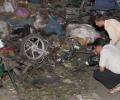
Four blasts rocked New Delhi on Saturday evening. The first blast was reported in Delhi's Karol Bagh, the second in M-block market in Greater Kailash and two in Cannaught Place in Delhi.
Openly challenging investigators and security agencies in their mail, the Indian Mujahideen has stated that next on their target would be the metropolitan cities of Chennai and Mumbai. The mail is more or less on the lines of the one sent in the aftermath of the Ahmedabad blasts.
Students Islamic Movement of India chief Safdar Nagori and four others, brought from Madhya Pradesh for questioning in connection with the Ahmedabad serial blasts, were sent to judicial custody on Monday by a metropolitan court in Ahmedabad.Nagori, along with his four accomplices Abdul Sibley, Hafeez Hussain, Kamruddin Nagori and Amil Pervez, all accused in the serial bomb blast case, were brought before Metropolitan Magistrate G M Patel after their remand period ended today.
